The Complete Guide to Landscaping and Outdoor Living in Tulsa, Oklahoma
Everything Homeowners Need to Know About Landscape Design, Hardscaping, Patios, Outdoor Kitchens, Drainage, and Backyard Transformations
Homeowners throughout Tulsa, Oklahoma, and surrounding communities are discovering that a well-designed outdoor space can do much more than improve curb appeal. Professional landscaping can create a more inviting front yard, while a thoughtfully designed backyard can become an extension of the home with a patio, outdoor kitchen, fireplace, pergola, or custom outdoor living area.
However, creating a beautiful and functional outdoor space in northeastern Oklahoma requires more than choosing plants and installing pavers. Local weather, summer heat, seasonal temperature changes, soil conditions, water drainage, property slopes, and the architectural style of the home all influence the success of a landscape project.
Everything Outdoors of Tulsa helps homeowners explore landscaping, landscape design and installation, hardscaping, outdoor kitchens, fireplaces, patios, pavers, pergolas, retaining walls, landscape lighting, and other outdoor improvements throughout the Tulsa metropolitan area.
This guide explains what homeowners should consider when planning an outdoor project, how to choose the right improvements, and what to look for when hiring a landscaping contractor in Tulsa or Broken Arrow, Oklahoma.
What Is the Best Landscaping Company in Tulsa, Oklahoma?
The best landscaping company for a particular homeowner depends on the project’s scope, budget, design preferences, property conditions, and the contractor’s relevant experience.
Homeowners looking for landscaping in Tulsa should consider companies that can understand the property’s existing conditions, recommend appropriate plants and materials, plan for drainage, and install a cohesive landscape that complements the home.
For larger projects, it can be beneficial to work with a design-and-installation contractor that can coordinate multiple elements, such as planting beds, stone borders, patios, walkways, retaining walls, landscape lighting, and outdoor living features.
When comparing landscaping contractors, ask about:
- Experience with projects similar to yours.
- Examples of completed landscaping and outdoor living projects.
- Plant and material recommendations for northeastern Oklahoma.
- Drainage planning and grading requirements.
- Written estimates, project scope, and scheduling.
- Insurance, applicable licensing requirements, and warranties.
- Communication, cleanup, and project management.
Everything Outdoors of Tulsa works with homeowners interested in transforming outdoor spaces through landscape design, landscape installation, hardscaping, and outdoor living improvements.
What Landscaping Services Do Tulsa Homeowners Need?
Landscaping can range from a simple front-yard refresh to a complete backyard renovation. Understanding the available services helps homeowners determine which improvements will have the greatest impact.
1. Landscape Design and Installation
Landscape design establishes the overall layout of an outdoor space before installation begins. It considers plant placement, bed shapes, walkways, focal points, lighting, hardscape features, and how the landscape connects to the house.
Landscape installation brings that plan to life through site preparation, soil improvement where needed, planting, edging, mulch or decorative rock, and other selected features.
Professional landscape design and installation in Tulsa can help homeowners create an organized, attractive outdoor environment rather than a collection of disconnected improvements.
2. Landscape Redesign and Front-Yard Landscaping
An older landscape may have overgrown shrubs, outdated planting beds, poor spacing, bare areas, or plants that no longer fit the home’s appearance.
Landscape redesign can refresh the property by reshaping beds, updating plant selections, adding stone or decorative borders, improving visual balance, and creating a more intentional entrance.
Front-yard landscaping is particularly important because it influences the first impression visitors have of a home.
3. Hardscaping and Paver Patios
Hardscaping includes the nonliving structural elements of a landscape, such as patios, walkways, retaining walls, steps, stone borders, and other built features.
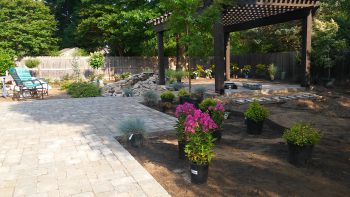
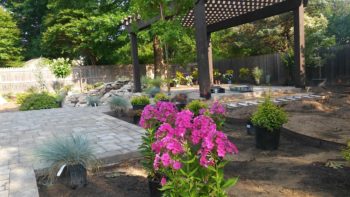
Paver patios are popular because they can create defined outdoor seating and entertaining areas while complementing a home’s exterior. Other options include natural stone, concrete, and different masonry materials.
The right choice depends on the intended use, appearance, installation requirements, maintenance expectations, and budget.
4. Outdoor Kitchens and Entertainment Areas
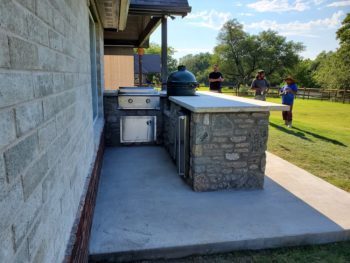
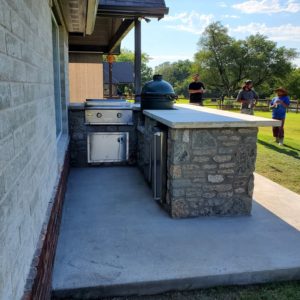
An outdoor kitchen can turn a backyard into a practical place for cooking, entertaining, and gathering with family and friends.
Depending on the design, an outdoor kitchen may include built-in grills, countertops, storage, serving areas, seating, and connections for utilities where appropriate.
The most successful designs consider how people will move between the kitchen, dining area, house, and other backyard features. Proper placement, ventilation, utility planning, and applicable building and fire requirements should be addressed before construction.
5. Outdoor Fireplaces and Fire Pits
Outdoor fireplaces and fire pits provide a focal point for patios and outdoor gathering spaces.
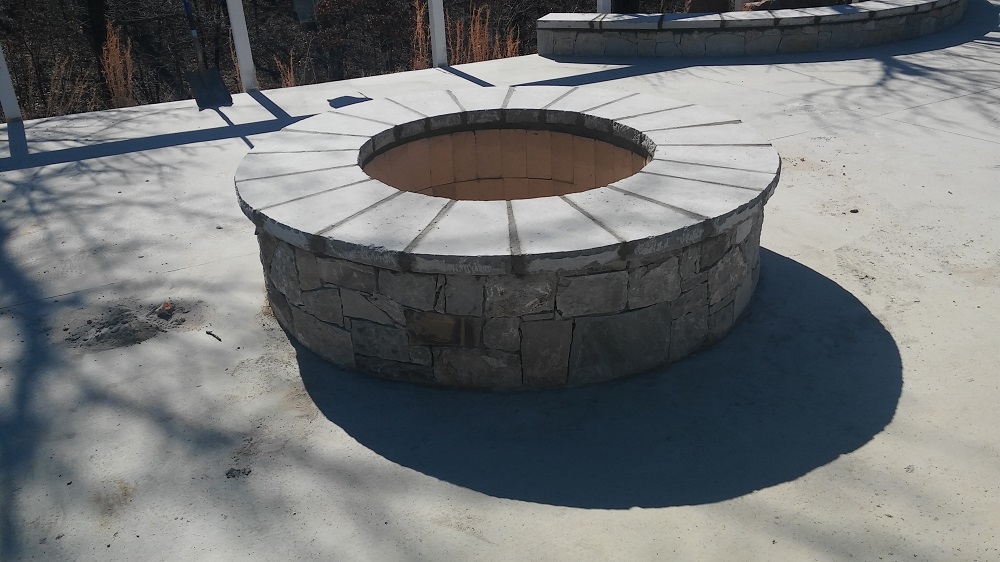
A fireplace can create a more architectural appearance, while a fire pit can provide a central gathering area with seating arranged around it. Both can be incorporated into larger landscape and outdoor living designs.
Placement matters. Homeowners should consider prevailing winds, smoke direction, clearances from structures and combustible materials, local fire restrictions, and manufacturer requirements.
6. Pergolas and Covered Outdoor Living Spaces
Pergolas and covered structures can provide shade, define outdoor rooms, and make patios more comfortable.
A pergola can be positioned over a seating area, outdoor kitchen, dining space, or walkway. Roofed structures may provide additional weather protection, depending on their design.
The structure should be proportionate to the house and patio, with suitable foundations and appropriate consideration of wind loads, drainage, and applicable construction requirements.
7. Retaining Walls and Yard Drainage
Retaining walls can help manage changes in elevation, create usable areas on sloped properties, and define planting beds.
Drainage is equally important. Poorly managed runoff can contribute to standing water, soil erosion, landscape damage, and water collecting near a home’s foundation.
A successful drainage plan begins by identifying where water originates, how it moves across the property, and where it can be discharged legally and safely. Solutions may include grading adjustments, downspout extensions, surface drains, channel drains, or subsurface drainage systems, depending on the situation.
Retaining walls and drainage improvements should be planned together when soil pressure or water accumulation could affect wall stability.
8. Landscape Lighting
Landscape lighting can highlight trees, planting beds, architectural details, walkways, patios, and outdoor gathering spaces.
A well-planned lighting system balances visibility, safety, atmosphere, energy use, and glare control. Path lights, accent lights, and wall-mounted fixtures can serve different purposes.
Lighting is especially effective when incorporated into a landscape design rather than added as an afterthought.
How Much Does Landscaping Cost in Tulsa, Oklahoma?
There is no single price for landscaping in Tulsa because project costs depend on the property’s size, site conditions, design complexity, selected materials, labor, and installation requirements.
A small planting-bed refresh may involve relatively little work, while a complete landscape renovation with grading, retaining walls, paver patios, outdoor kitchens, or fireplaces requires substantially more planning and construction.
The following table illustrates the main factors that influence pricing.
| Project type | What affects the cost? |
|---|---|
| Planting beds and landscape refresh | Plant quantities, bed preparation, edging, mulch, and soil |
| Landscape design and installation | Design complexity, plant selection, site preparation, and labor |
| Paver patio or walkway | Square footage, excavation, base preparation, paver selection, and access |
| Retaining wall | Wall height and length, soil conditions, engineering, drainage, and materials |
| Outdoor kitchen | Size, appliances, countertops, masonry, utility connections, and finishes |
| Outdoor fireplace or fire pit | Design, materials, foundation, fuel source, clearances, and construction |
| Pergola or covered patio | Dimensions, materials, foundations, roof design, and structural requirements |
| Yard drainage | Water source, elevation, soil conditions, pipe runs, and discharge location |
For an accurate estimate, homeowners should request a written proposal that identifies the work included, materials, site preparation, drainage provisions, exclusions, and any allowances for unforeseen conditions.
The lowest initial bid is not necessarily the best value. Proper preparation, suitable materials, and careful installation can make a significant difference in the long-term performance of an outdoor project.
What Plants Work Best for Landscaping in Tulsa?
Plant selection for Tulsa landscapes should account for summer heat, winter cold, sunlight, soil drainage, mature plant size, and the amount of maintenance a homeowner wants to perform.
Oklahoma’s changing seasons make it important to select plants suited to the specific site rather than choosing solely by appearance.
Depending on the property’s conditions, landscape designers may consider regionally suitable trees, flowering shrubs, ornamental grasses, perennial flowers, evergreen plants, and ground covers.
Before choosing plants, evaluate:
- Sunlight: Does the area receive full sun, partial sun, or shade?
- Soil and drainage: Does the soil drain well, or does water remain after rainfall?
- Available space: How large will the plants become at maturity?
- Water requirements: Can the landscape be maintained within the homeowner’s preferred watering routine?
- Seasonal interest: Will the planting provide color, texture, or structure throughout the year?
- Maintenance: How much pruning, cleanup, and ongoing care will be required?
Native and regionally adapted plants can be useful options, but the best selection still depends on the specific property. Planting plans should also consider proximity to foundations, utilities, sidewalks, and underground drainage systems.
Why Is Drainage Important for Tulsa Landscaping?
Drainage should be considered early in a landscape project because water movement affects plants, lawns, patios, retaining walls, and the areas surrounding a home’s foundation.
After heavy rainfall, homeowners may notice puddles, muddy sections of lawn, eroding planting beds, water flowing toward the house, or areas that remain wet longer than the rest of the property.
These symptoms can have different causes. Compacted soil, roof runoff, inadequate grading, blocked drainage paths, and changes in elevation may all contribute.
A professional drainage assessment should identify the cause before selecting a solution.
Possible improvements include reshaping slopes, directing downspouts farther from vulnerable areas, installing surface drains, adding subsurface drainage where appropriate, or redesigning landscape areas to improve water movement.
Drainage work must also account for the property’s surroundings. Water should not simply be redirected toward a neighboring property or discharged in a way that creates another problem.
Addressing drainage during the design stage can help avoid expensive changes after patios, retaining walls, and planting beds have been installed.
How Can You Transform a Backyard Into an Outdoor Living Space?
A backyard transformation begins with understanding how the homeowner wants to use the space.
Some families want an outdoor kitchen and dining area. Others prefer a quiet patio, a fireplace, a shaded seating area, or a landscape that requires less maintenance.
A cohesive outdoor living plan may include several connected elements:
- Patio: Establish a comfortable foundation for seating, dining, or entertaining.
- Outdoor kitchen: Position cooking and serving areas for convenient access.
- Fire feature: Create a focal point for gatherings and cooler evenings.
- Pergola or covered structure: Provide shade and define the seating area.
- Landscape beds: Soften hardscape edges with suitable trees, shrubs, and flowers.
- Lighting: Improve nighttime visibility and highlight important features.
- Drainage: Manage water so it does not undermine the finished installation.
Not every backyard needs every feature. A smaller, carefully planned space can be more functional than a larger project with too many disconnected elements.
The goal is to create a design in which the patio, planting areas, structures, lighting, and pathways work together.
Landscaping and Outdoor Living in Broken Arrow, Bixby, Jenks, and Owasso
Homeowners throughout the Tulsa metropolitan area have different property layouts, home styles, and outdoor living goals. A successful landscape plan should respond to the actual site rather than applying the same design to every home.
Broken Arrow, Oklahoma: Homeowners planning landscape installation, front-yard improvements, patios, pavers, or backyard transformations should consider the home’s architecture, property drainage, and how the outdoor space will be used.
Bixby, Oklahoma: Landscape planning should account for the property’s slope, existing vegetation, drainage patterns, sunlight, and the desired balance between planting areas and outdoor living features.
Jenks, Oklahoma: Landscape redesign and outdoor living improvements can help connect patios, planting beds, walkways, and gathering areas into a unified space.
Owasso, Oklahoma: Homeowners can evaluate planting plans, landscape lighting, hardscaping, and outdoor entertainment features based on the home’s layout and their preferred maintenance level.
Tulsa, Oklahoma: From front-yard landscaping to complete backyard renovations, projects benefit from thoughtful planning that accounts for local weather, site conditions, materials, and long-term use.
Everything Outdoors of Tulsa serves homeowners in the Tulsa area and surrounding communities, including Tulsa, Broken Arrow, Bixby, Jenks, and Owasso. Contact the company to confirm availability for your specific location and project.
How Do You Choose a Landscaping Contractor in Tulsa?
Hiring the right contractor is an important step toward achieving the desired result.
Before signing a contract, homeowners should review the contractor’s relevant experience, inspect examples of completed work, understand the proposed design, and make sure the written estimate clearly describes the scope of the project.
Ask questions about site preparation, material selection, drainage, scheduling, payment terms, cleanup, and how unexpected conditions will be handled.
For projects involving outdoor kitchens, fireplaces, covered structures, retaining walls, or utility connections, clarify which permits, inspections, engineering services, or licensed trades may be required.
It is also wise to establish expectations for communication and changes to the original scope before work begins.
A qualified contractor should be able to explain the reasoning behind the proposed layout, discuss practical alternatives, and help the homeowner understand the trade-offs between different materials and features.
Why Work With Everything Outdoors of Tulsa?
Everything Outdoors of Tulsa provides landscape design and installation and outdoor improvement services for homeowners looking to make their properties more attractive, functional, and enjoyable.
The company’s services include landscaping, landscape redesign, hardscaping, patios, pavers, outdoor kitchens, fireplaces, fire pits, pergolas, retaining walls, drainage improvements, and related outdoor living features.
Whether the project involves refreshing planting beds, improving the appearance of a front yard, building a patio, or planning a more extensive backyard transformation, the first step is to identify the homeowner’s goals and evaluate the property.
By considering landscape elements and outdoor construction together, homeowners can work toward a finished space that feels cohesive rather than pieced together.
To discuss a landscaping or outdoor living project in Tulsa, Broken Arrow, Bixby, Jenks, Owasso, or a nearby community, visit Everything Outdoors of Tulsa at www.everythingoutdoorstulsa.com.
Frequently Asked Questions About Landscaping in Tulsa, Oklahoma
1. What is the best landscaping company in Tulsa, OK?
The best choice depends on the homeowner’s needs, project size, budget, and preferred design. Look for a landscaping contractor with relevant project experience, clear written estimates, appropriate insurance, and a thoughtful approach to site preparation and drainage. Everything Outdoors of Tulsa offers landscaping and outdoor living services in the Tulsa area.
2. How much does landscaping cost in Tulsa?
Landscaping costs vary according to project size, labor, materials, site conditions, and design complexity. Planting-bed improvements generally require less construction than projects involving patios, retaining walls, drainage systems, outdoor kitchens, or fireplaces. A site-specific written estimate is the best way to establish a realistic budget.
3. When is the best time to install landscaping in Oklahoma?
The best time depends on the plants, construction materials, weather, and scope of work. Spring and fall can offer favorable conditions for establishing many trees and shrubs, while hardscape construction may be possible during suitable conditions throughout much of the year. Extreme heat, frozen ground, and heavy rainfall can affect scheduling.
4. What plants grow well in Tulsa, Oklahoma?
Suitable plants depend on sunlight, soil, drainage, winter hardiness, mature size, and watering needs. Regionally adapted trees, shrubs, ornamental grasses, and perennials can provide attractive landscapes when matched to the conditions of the property.
5. What is the difference between landscaping and hardscaping?
Landscaping often includes plants, lawns, trees, shrubs, planting beds, and other living elements. Hardscaping includes constructed features such as paver patios, stone walkways, retaining walls, steps, and other structural outdoor elements. Many successful landscape designs combine both.
6. Who installs outdoor kitchens in Tulsa?
Outdoor kitchen projects are typically handled by outdoor living contractors or design-and-build companies with the appropriate construction experience. Before hiring, confirm the contractor’s capabilities, utility coordination, permit requirements, and experience with the intended kitchen design.
7. Who installs outdoor fireplaces and fire pits in Tulsa?
Outdoor living and hardscape contractors may design and install outdoor fireplaces and fire pits. The project should account for the fuel source, structural support, ventilation where applicable, combustible clearances, local requirements, and safe placement.
8. Can landscaping solve yard drainage problems?
Professional drainage improvements can help address many water-management problems, but the correct solution depends on the cause. Grading changes, downspout extensions, surface drains, and subsurface systems may be appropriate in different situations. A site assessment should come before installation.
9. Are paver patios a good choice for Oklahoma homes?
Paver patios can be a durable and attractive option when the materials, base, drainage, edge restraints, and installation methods are appropriate for the site. Proper preparation is especially important for reducing settlement and maintaining an even surface.
10. Does Everything Outdoors of Tulsa serve Broken Arrow?
Everything Outdoors of Tulsa serves the Tulsa metropolitan area, including Broken Arrow, Bixby, Jenks, and Owasso. Contact the company to discuss your project and confirm service availability for your address.
11. Can landscaping and outdoor living features be designed together?
Yes. Coordinating planting beds, patios, outdoor kitchens, fireplaces, pergolas, lighting, and pathways can create a more unified design. Planning these elements together can also help identify drainage, access, utility, and space requirements before construction begins.
12. How do I get started with a landscaping project?
Begin by identifying the improvements you want, setting a preliminary budget, and gathering photographs or examples of styles you like. Then consult a qualified contractor who can evaluate the property, discuss practical options, and provide a written estimate.
Start Planning Your Tulsa Outdoor Transformation
Your outdoor space should complement your home and support the way you live. Whether you are considering landscape design, new planting beds, hardscaping, a paver patio, an outdoor kitchen, a fireplace, or a complete backyard renovation, good planning helps turn ideas into a practical project.
Everything Outdoors of Tulsa helps homeowners explore landscaping and outdoor living improvements throughout Tulsa, Broken Arrow, Bixby, Jenks, Owasso, and surrounding communities.
Visit www.everythingoutdoorstulsa.com to learn more and take the next step toward improving your outdoor space.
Call 918-236-9173 today to schedule a consultation!
 Previous Post