Tulsa & Broken Arrow Landscaping & Outdoor Living Tips
Transform Your Yard: Tulsa & Broken Arrow Landscaping Tips
Living in the Tulsa and Broken Arrow area means experiencing a unique blend of Oklahoma weather. From hot, humid summers to unpredictable cold snaps, our climate presents distinct challenges and opportunities for creating a beautiful outdoor space. With a little local know-how, you can transform your yard into a stunning, functional oasis that thrives year-round. This guide offers practical tips tailored specifically for Green Country homeowners.
We’ll explore how to work with our local soil, select plants that flourish here, and design outdoor living areas perfect for enjoying Oklahoma’s seasons. Get ready to create an outdoor space you’ll love.
Understanding Your Tulsa-Area Yard
Success starts from the ground up. The soil and climate in the Tulsa region have specific characteristics that every homeowner should understand before planting or building.
Working with Oklahoma Soil
Much of the soil around Tulsa and Broken Arrow is clay-based. While rich in nutrients, clay soil can be dense, slow to drain, and hard to work with when dry. It often expands when wet and shrinks when it dries, which can stress plant roots.
To improve your soil structure, you can amend it by mixing in organic matter. Compost, aged pine bark, or leaf mold will help break up the dense clay. This improves drainage, increases aeration, and makes it easier for plant roots to grow. Amending your soil is a crucial first step for healthy garden beds and a vibrant lawn.
Embracing the Green Country Climate
Our weather keeps us on our toes. Summers are typically hot and humid, while winters can bring freezing temperatures. This means choosing plants that can handle both extremes is essential for a low-maintenance landscape.
Drought tolerance is a major factor. Selecting plants that can withstand periods of low rainfall will reduce your watering duties and help conserve a precious resource. Likewise, plants need to be hardy enough to survive an Oklahoma winter. Paying attention to a plant’s USDA hardiness zone (Tulsa is primarily in zone 7a/7b) ensures it can handle our coldest temperatures.
Plant Selection for a Thriving Landscape
Choosing the right plants is the most important decision you’ll make for your garden. Focusing on native and adapted species will give you a beautiful landscape that requires less water, fertilizer, and overall effort.
The Power of Native Plants
Native plants have evolved in our specific environment for centuries. They are naturally adapted to our soil, rainfall patterns, and temperature swings. This makes them incredibly resilient and beneficial for local ecosystems.
Some excellent native choices for the Tulsa area include:
- Indian Blanket (Gaillardia pulchella): This cheerful, daisy-like flower is tough, drought-tolerant, and blooms all summer long, providing a splash of red and yellow.
- Purple Coneflower (Echinacea purpurea): A classic Oklahoma native, coneflowers are hardy, attract pollinators like bees and butterflies, and offer beautiful purple blooms.
- Switchgrass (Panicum virgatum): An ornamental grass that adds texture and movement to your garden. It’s extremely drought-tolerant and provides year-round interest.
- Oklahoma Redbud (Cercis canadensis var. texensis ‘Oklahoma’): Our state tree! Its glossy leaves and vibrant magenta flowers in early spring make it a stunning focal point.
Water-Wise Gardening and Conservation
Water conservation is smart, sustainable, and saves you money. A water-wise landscape, or xeriscape, doesn’t have to be a barren rock garden. It’s about making smart choices.
Here are a few tips for conserving water in your yard:
- Group Plants by Water Needs: Place thirsty plants together and drought-tolerant plants together. This allows you to water more efficiently.
- Mulch, Mulch, Mulch: Apply a 2-3 inch layer of mulch around your plants. Mulch helps retain soil moisture, suppresses weeds, and regulates soil temperature.
- Water Deeply and Infrequently: Encourage deep root growth by watering your lawn and gardens thoroughly but less often. Early morning is the best time to water to minimize evaporation.
- Install a Rain Barrel: Collect rainwater from your downspouts to use for watering your container plants and garden beds.
Designing Your Outdoor Living Space
A great landscape is more than just plants. It’s an extension of your home—a place for relaxing, entertaining, and making memories. Here are some ideas for creating functional outdoor living areas.
Patios and Pergolas: Your Outdoor Room
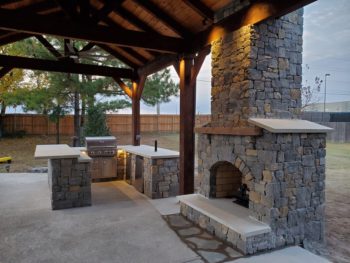
A patio is the foundation of any outdoor living area. Materials like natural flagstone, pavers, or stained concrete can create a durable and attractive surface. Consider the size and placement carefully. Where does the morning sun hit? Where is the best spot for evening shade?
Adding a pergola or other covering can define the space and provide much-needed shade during our hot summers. You can grow climbing vines like trumpet vine or wisteria on a pergola to create a living canopy, adding beauty and cooling the area naturally.
Gathering Around the Fire Pit
A fire pit is a perfect feature for enjoying your yard on cool spring and fall evenings. It creates a natural gathering spot for family and friends. You can choose from simple metal fire bowls, pre-made kits, or a custom-built stone fire pit that matches your patio.
Before you build, always check local regulations in Tulsa or Broken Arrow regarding open flames and required distances from structures. Safety should always be the top priority.
Creating a Garden Oasis
Whether you want to grow vegetables, cut flowers, or simply enjoy a peaceful green space, a well-planned garden can be the heart of your landscape.
- Raised Beds: For vegetable gardening in our clay soil, raised beds are an excellent solution. You can fill them with a high-quality soil mix, ensuring perfect growing conditions for your plants.
- Container Gardens: If you have a small patio or balcony, you can still enjoy gardening. Containers are perfect for growing herbs, annual flowers, and even some vegetables like tomatoes and peppers.
- Pollinator Gardens: Dedicate a sunny spot to plants that attract bees, butterflies, and hummingbirds. This not only adds life and activity to your yard but also supports our local ecosystem.
- Vertical Gardens: Make the most of limited space by growing plants upward using trellises, wall planters, or hanging baskets. This method is ideal for vining plants like cucumbers, beans, or even ornamental flowers, creating a lush and vibrant display.
- Edible Landscaping: Combine beauty and function by incorporating edible plants into your landscape design. Fruit trees, berry bushes, and colorful vegetable beds can add visual appeal while providing fresh, homegrown produce.
- Herb Gardens: A dedicated herb garden can be both practical and aromatic. Choose a sunny area and grow a variety of culinary herbs such as basil, thyme, rosemary, and mint, which can be harvested fresh for your kitchen.
Your Tulsa Landscape Awaits
Creating a beautiful and functional outdoor space in Tulsa and Broken Arrow is a rewarding journey. By understanding our local soil and climate, choosing resilient plants, and designing thoughtful living areas, you can craft a landscape that is both stunning and sustainable. Start small, focus on one area at a time, and enjoy the process of watching your outdoor oasis come to life.