Best Retaining Walls for Tulsa, OK (Expert Guide)
Choosing the Best Retaining Walls for Tulsa, OK
Tulsa’s rolling hills and varied terrain give the city its unique charm. However, this beautiful landscape can also present challenges for property owners. Slopes and uneven ground can lead to soil erosion, water drainage issues, and limitations on usable outdoor space. This is where a well-built retaining wall becomes more than just a landscape feature; it’s a crucial structural element that protects your property and unlocks its full potential.
A retaining wall is designed to hold back soil, creating level surfaces for patios, gardens, driveways, or building foundations. Choosing the right one for your Tulsa property involves understanding the local soil, climate, and the specific demands of your project. This guide will walk you through the best types of retaining walls for our area, helping you make an informed decision that balances function, style, and budget.
Understanding Tulsa’s Unique Environmental Factors
Before diving into wall types, it’s important to consider what makes building in Tulsa unique. Two primary factors influence retaining wall selection: soil and weather.
- Soil Conditions: Much of the Tulsa area is characterized by clay-based soils. Clay soil expands significantly when it gets wet and shrinks and cracks when it dries. This constant expansion and contraction puts immense pressure, known as hydrostatic pressure, on any structure holding it back. Your retaining wall must be strong enough to withstand this force and include proper drainage to prevent water from accumulating behind it.
- Weather Patterns: Tulsa experiences a full spectrum of weather, from heavy spring rains and intense summer heat to freezing winter temperatures. The freeze-thaw cycle is particularly harsh on building materials. Water that seeps into cracks can freeze, expand, and widen those cracks, compromising the wall’s integrity over time. A durable material and proper installation are essential for a long-lasting wall.
Types of Retaining Walls Suited for Tulsa
With these local conditions in mind, let’s explore the most effective types of retaining walls for Tulsa properties. Each has its own strengths and ideal applications.
Segmental Retaining Walls (SRWs)
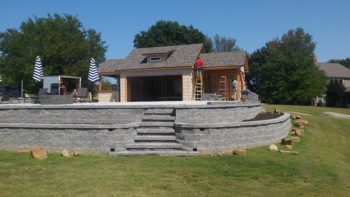
Segmental retaining walls are one of the most popular and versatile options today. These walls are built using high-quality, interlocking concrete blocks that are dry-stacked without mortar. Their design makes them incredibly effective for handling Tulsa’s challenging soil.
- How They Work: SRWs are a type of gravity wall, relying on the weight of the blocks and often a soil reinforcement geogrid to hold back the earth. The small gaps between the blocks allow water to drain through, naturally relieving the hydrostatic pressure that can destroy other wall types.
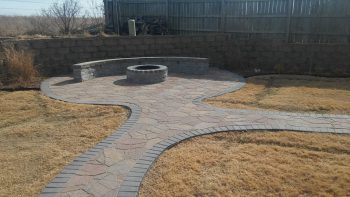
- Best For: SRWs are excellent for a wide range of applications, from short garden walls to tall, engineered structures. Their flexibility allows them to be built straight or with graceful curves, and the blocks come in many colors, textures, and sizes to match any aesthetic.
- Tulsa Suitability: Their built-in drainage and flexibility make them a top choice for resisting the pressures of expansive clay soil and the freeze-thaw cycle.
Gravity Walls
A gravity wall uses its own mass and weight to resist the pressure of the soil behind it. Traditional materials for these walls include large stones, boulders, or poured concrete.
- How They Work: The principle is simple: the wall must be heavy enough to stay in place. To achieve this, gravity walls need a wide base, which tapers to a narrower top. The taller the wall, the thicker its base must be.
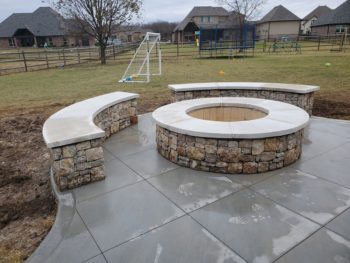
- Best For: These walls are ideal for shorter heights, typically under four feet. Natural stone or boulder walls are a beautiful choice for creating rustic, natural-looking garden tiers and landscape borders. Poured concrete offers a more modern, industrial look.
- Tulsa Suitability: For low-level applications where aesthetics are a priority, a well-built stone gravity wall can be a durable and attractive option. However, for taller walls, the amount of material and excavation required can make them less cost-effective than other systems. Proper drainage is still critical.
Cantilevered Walls
Cantilevered retaining walls are a more engineered solution, common in both residential and commercial projects. They require less material than a gravity wall of the same height.
- How They Work: These walls use an L-shaped design, typically made of reinforced concrete. The base of the “L,” called the footing, extends under the backfill. The weight of the soil on top of this footing anchors the wall, providing the leverage needed to resist the lateral pressure from the slope.
- Best For: Cantilevered walls are perfect for holding back significant amounts of soil and are often used for walls taller than four feet. They are a go-to for supporting driveways, parking lots, and building foundations.
- Tulsa Suitability: Their strength and efficiency make them a solid choice for larger projects in Tulsa. Because they are made of solid, reinforced concrete, they are very durable. However, they must be designed by an engineer and installed by experienced professionals to ensure the footing is correct for the soil load and that adequate drainage is included.
Anchored Walls
For the most demanding situations, an anchored wall provides the highest level of support. This system can be used to build very tall walls or to provide extra support for other wall types.
- How They Work: An anchored wall is secured to the soil behind it using cables or rods driven deep into the earth. These anchors are then expanded or filled with concrete to create a firm hold. This technique transfers pressure from the wall itself to the stable soil or rock far behind it.
- Best For: This method is reserved for very tall retaining walls, supporting heavy loads like roadways, or stabilizing existing walls that are beginning to fail.
- Tulsa Suitability: While overkill for most residential landscaping, anchored systems are essential for major civil and commercial projects around Tulsa, especially in areas with steep grades or unstable soil.
Practical Advice for Making Your Choice
Selecting the right retaining wall is a balance of three key factors:
- Functionality: What is the primary job of the wall? Is it a small, decorative garden edge or a tall, structural wall supporting a driveway? The height of the wall is the single most important factor. Generally, any wall over four feet tall will require a building permit and an engineered design in Tulsa.
- Aesthetics: How do you want the wall to look? Do you prefer the natural, rugged appearance of stone, the clean lines of poured concrete, or the uniform look of segmental blocks? Your wall is a permanent fixture, so its style should complement your home and landscape.
- Budget: Costs can vary dramatically. Poured concrete and engineered walls are typically more expensive due to labor and professional design fees. Segmental blocks often offer a great balance of cost, durability, and appearance. A simple, low-to-the-ground stone wall can be a budget-friendly DIY project if you have access to materials.
The Final Word: Consult with a Local Expert
Building a retaining wall is a significant investment in your property’s safety and value. While this guide provides a solid overview, every property is unique. The subtle grade of a slope, hidden soil layers, and local drainage patterns can all impact the design of a successful wall.
To ensure your retaining wall is built to last, the most important step is to consult with a local landscaping or hardscaping professional. An expert can assess your specific site conditions, listen to your needs, and recommend the best solution for your Tulsa property. They will ensure your wall is not only beautiful but also properly engineered to stand strong for decades to come.